
Marine mammal calls
Find candidate calls, whistles or clicks using models trained for the project and recording conditions.
Model-assisted event review
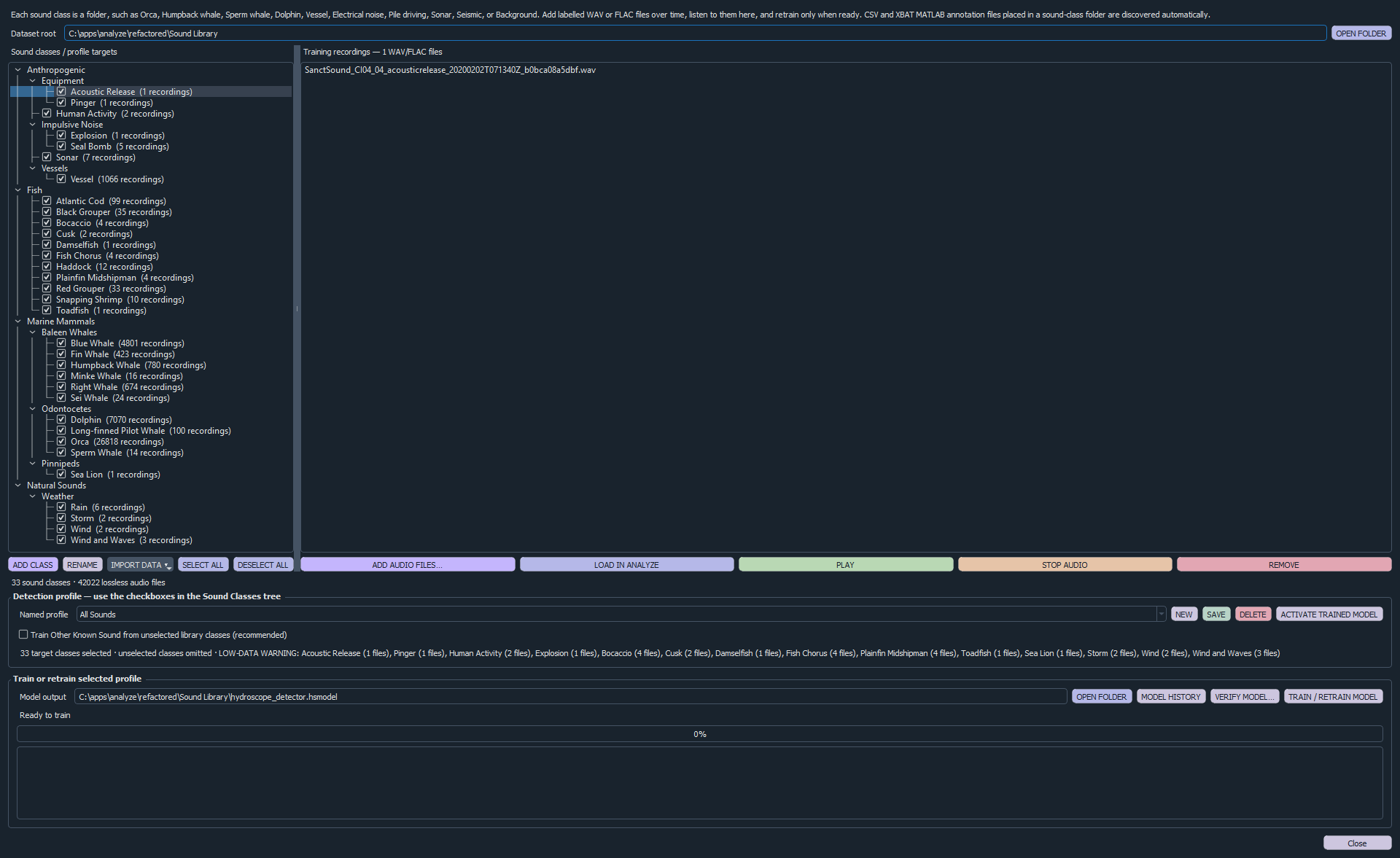
Search recordings for time-frequency events, classify candidates with a project-relevant model and review every proposed annotation against the spectrogram and audio.
Detection with evidence
Automated detection is most useful when its result can be checked quickly. Analyze keeps the proposed event, model output, source recording and analyst decision connected.
Identify connected time-frequency features against the local spectrogram background and place candidate boxes around events for review.
Display the predicted class, confidence, window agreement and strongest alternatives from the selected acoustic model.
Listen, inspect and accept, relabel or reject each candidate. The reviewed result—not the initial prediction—becomes the project record.
Detection applications
Find candidate calls, whistles or clicks using models trained for the project and recording conditions.
Review recurring tonal, broadband or transient events across deployment recordings.
Locate short-duration acoustic events and retain their time-frequency evidence.
Test independent labelled files and surface mismatches or ambiguous predictions before operational use.
Return accepted events and useful background examples to organised sound-class folders.
Retain model output, confidence, source times and the analyst's final classification.
Responsible use
Detection and classification quality depends on representative labelled material, recorder response, background conditions and the target sounds. Models should be verified on independent recordings from the intended operating environment, and important results should remain subject to analyst review.
We can demonstrate the detection and review loop using classes and recording conditions relevant to your project.