New tools, workflow changes and fixes in Analyze and Pulse Gen, newest first.
Pulse GenNew feature
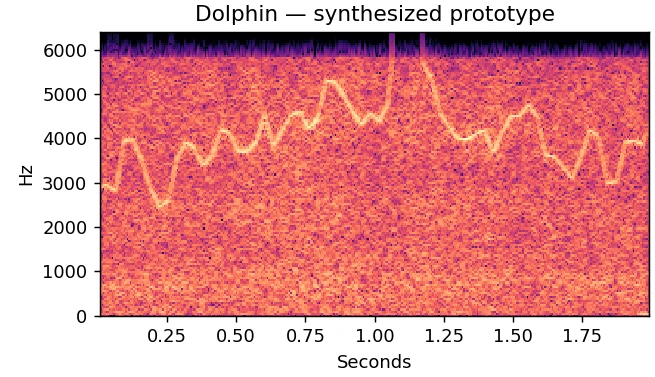
Marine-mammal call synthesis for 15 species
Marine Mammal Generation synthesises new calls for 15 species, from humpback, blue and right whales to dolphins, orcas and ultrasonic beaked whales. Calls are built from learned parameter models, scaled with calibrated level prediction, and can run as a continuous soundscape. The species are acoustic prototypes; support varies with the training data available.
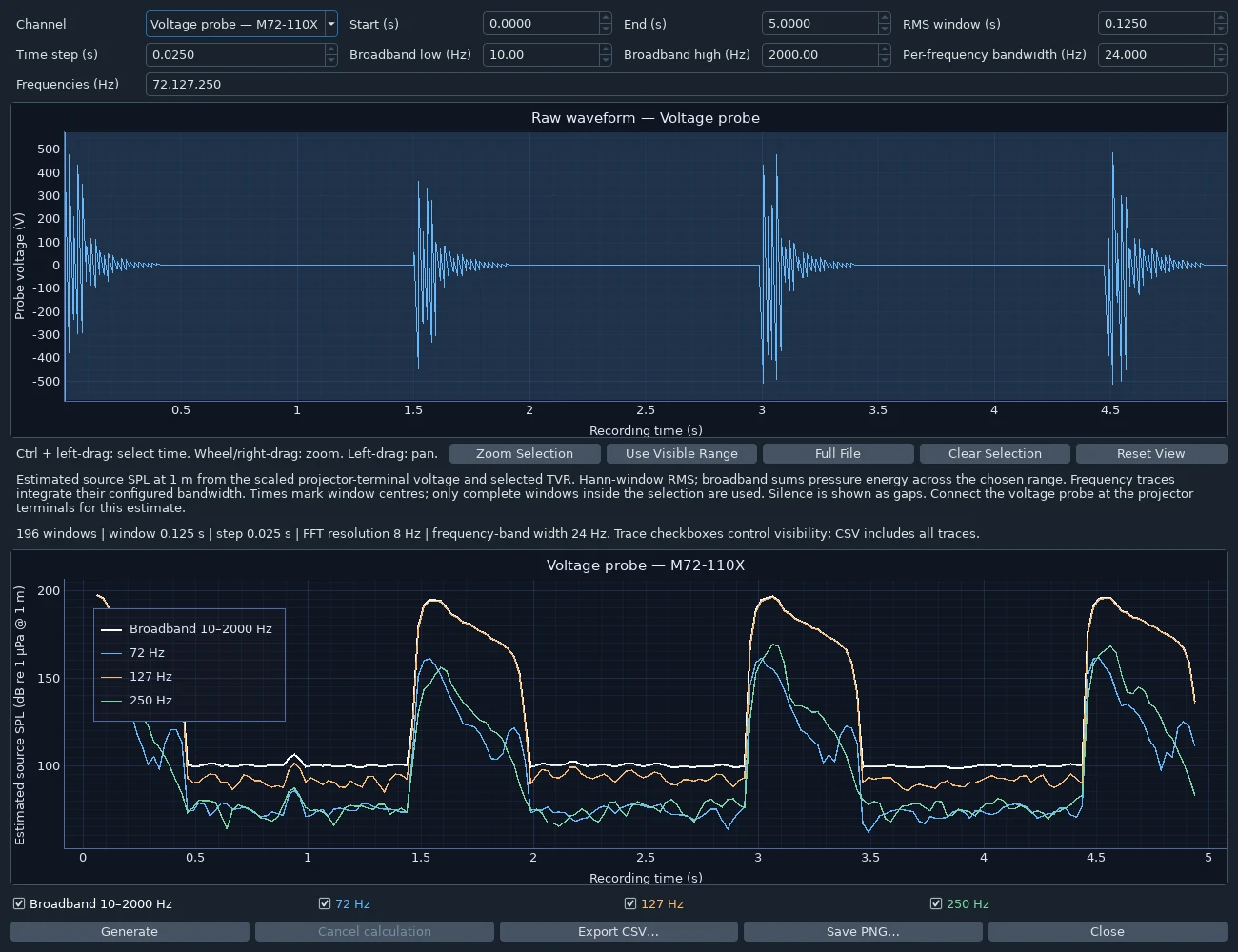
Live capture, SPL vs Time and calibrated peak labels
Live Capture streams PORPOISE, TRAC and NI-DAQmx inputs with per-channel waveform, spectrogram and FFT, optional recording, and calibrated channel-noise tests with Wenz overlays. SPL vs Time and calibrated FFT peak labels estimate projector source level from a voltage probe and the TVR curve. Licence requests and installation now use a single popup.
Pile Driving Noise adds standard and heavy monopile, jacket pin-pile, soft-start and distant styles, with per-strike peak SPL, T90 RMS SPL and single-strike SEL, level progression and pauses, a choice of spectrum strategy, and a projector electrical-impedance overlay.
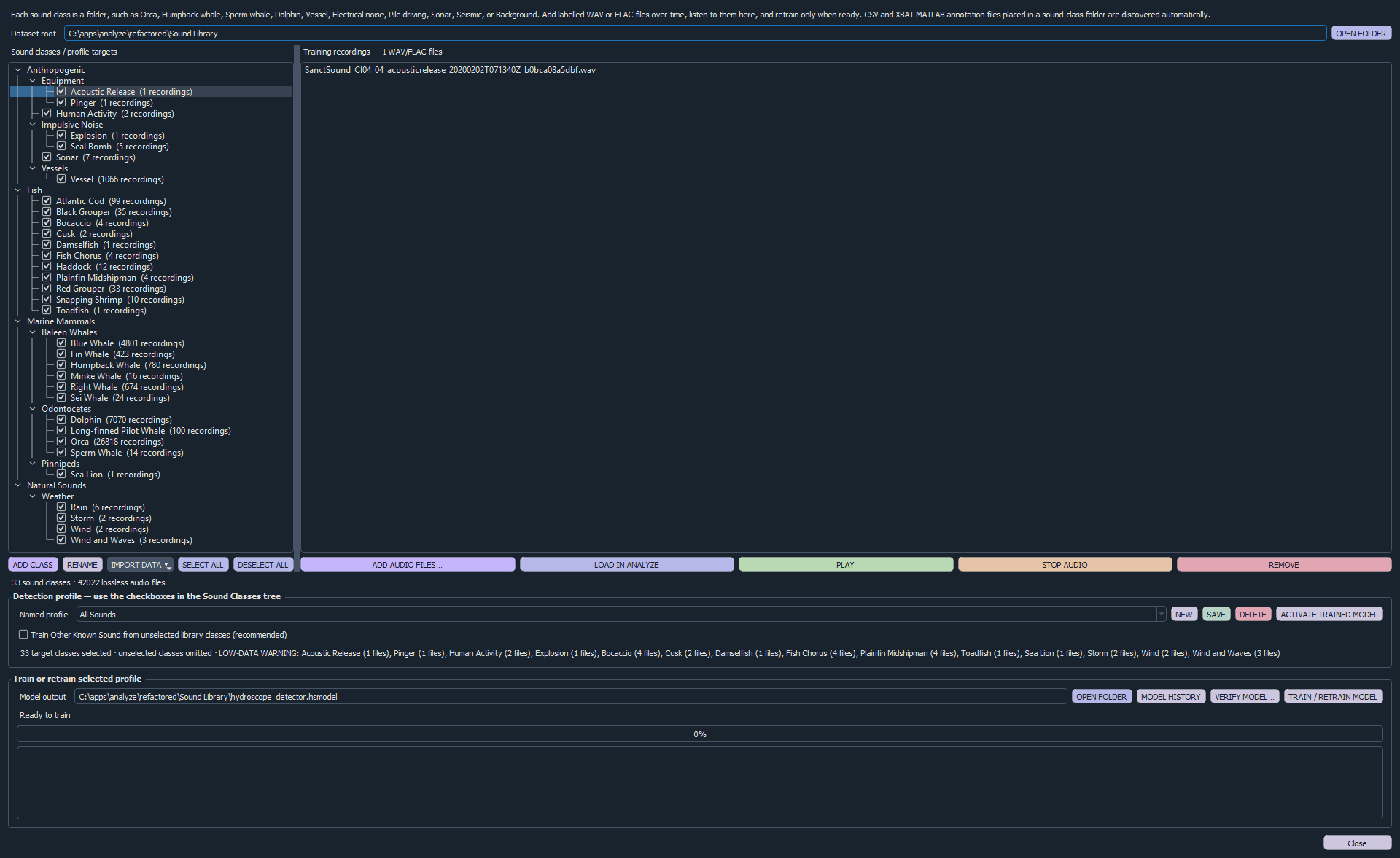
Acoustic machine learning and reviewed auto-annotation
Organise labelled WAV and FLAC recordings into a reusable Sound Library, train complete or focused detection profiles, and apply the active model to candidate events in the spectrogram. Every proposed annotation is reviewed and corrected by the analyst before it becomes part of the project record.